Table of Contents
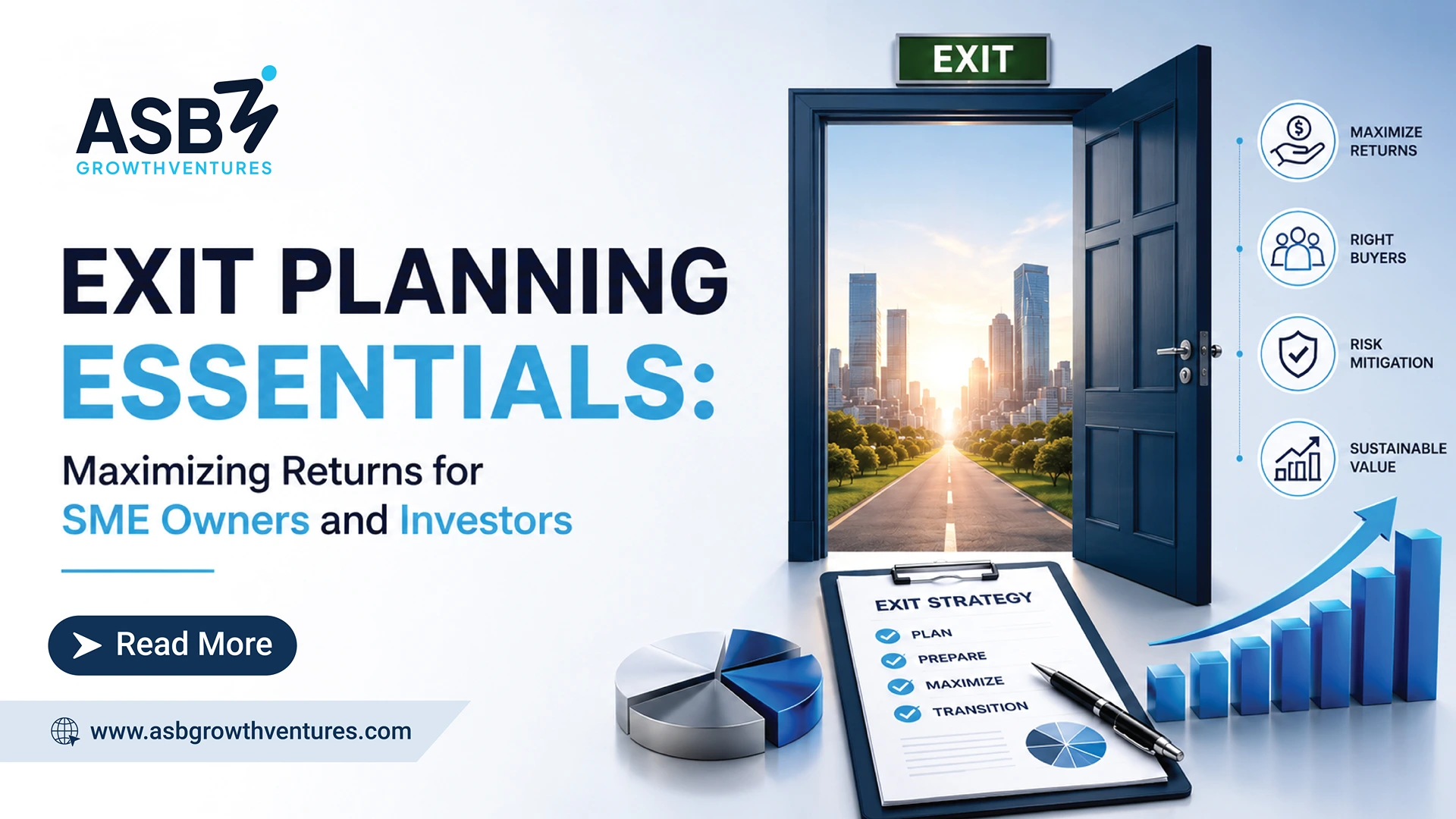
ToggleExit Planning Essentials: Maximising Returns for SME Owners and Investors
Most founders spend years building something valuable and about three weeks thinking about how to actually get out of it.
That’s not a criticism. Running a business takes everything you’ve got. Exit planning feels abstract when you’re dealing with cash flow, team issues, and quarterly targets. But here’s the thing: how you exit determines how much of what you built you actually keep.
The difference between a well-planned exit and a rushed one isn’t just a few crore rupees. It can be the difference between a deal that closes and one that falls apart in due diligence. Between selling at a fair price and leaving serious money on the table.
So let’s talk about what exit planning actually involves, and what SME owners need to get right before that conversation even starts.
What Does Exit Planning Actually Mean?
It’s not just about finding a buyer.
Exit planning is the process of structuring your business so that when you’re ready to step back, you can do it on your terms. That means knowing what your business is worth, who might want to buy it, how the deal would be structured, and what happens to your team, your clients, and your tax liability when it’s done.
Some founders plan exits years in advance. Others start when they get an unsolicited offer and suddenly realize they have no idea what their business is actually worth or whether their books are clean enough to survive due diligence.
The earlier you start, the more options you have. That’s really the whole point.

Why Most SME Exits Go Wrong
A few things come up repeatedly when exits fall apart or underdeliver.
1. The business is too dependent on the founder
If the business runs because of you, personally, a buyer is going to price that risk in heavily. They’re not just buying revenue. They’re buying a system. If that system is you, the valuation reflects it. Getting yourself out of day-to-day operations before you try to sell is one of the most valuable things you can do.
2. The financials aren’t clean
Mixed personal and business expenses. Inconsistent accounting practices. Revenue that looks good on paper but doesn’t hold up under scrutiny. Any of these will slow a deal down or kill it entirely. Buyers and their teams are thorough. They will find things.
3. No clarity on structure
Is this a share sale or an asset sale? What are the tax implications for the promoter? What happens to existing contracts and employees? These questions don’t have one right answer, but they need answers before you’re in a room with a buyer. Working with a solid transaction advisory team helps you think through structure before you’re under pressure.
4. Starting too late
Exit prep that should take 18 months gets compressed into 3. Corners get cut. Issues that could have been fixed surface at the wrong time. The founder is negotiating from a weaker position than they need to be.
The Four Exit Routes Worth Knowing
Not every exit looks the same. Here are the main ones SME owners typically consider:
1. Strategic Sale
Selling to a larger company in your industry or an adjacent one. Usually commands the best valuation because the buyer sees synergies. The process is more intense and due diligence is thorough, but the outcome can be significantly better than other routes.
2. Private Equity or Financial Investor
A PE firm or investor buys a stake, often with the founder staying on for a transition period. This works well when the business has strong fundamentals but needs capital and professional management to scale. Requires clean financials and a credible growth story.
3. Management Buyout
The existing leadership team buys the business. This is simpler from a relationship standpoint and often preferred when the founder cares about continuity. Financing the buyout is the main challenge.
4. IPO
Going public is a real exit option for SMEs that have the scale and structure for it. The SME IPO platform on BSE and NSE has seen strong traction. It’s not a quick process, but it can deliver significant value and liquidity for promoters. If this is on your radar, getting an IPO consultant involved early makes a real difference. The preparation work alone typically takes 12 to 24 months.
Getting Your Business Ready to Sell
Regardless of which route you take, a few things need to be in order.
- Audited financials for at least three years, clean and consistent
- Documented processes that don’t rely on any single person to function
- A stable, recurring revenue base with visible pipeline
- Clean cap table with no ambiguity around shareholding or ESOPs outstanding
- Compliance up to date across GST, ROC, and any sector-specific regulations
- Key contracts and IP properly documented and assigned to the company, not the founder personally
None of this is complicated. But it takes time to put in order, which is why starting early matters.
Valuation: The Number That Changes Everything
Most founders have a number in their head. Buyers have a different number in theirs. The gap between those two numbers is where deals die.
A proper valuation isn’t just about revenue multiples. It factors in your EBITDA margins, growth trajectory, customer concentration, sector comparables, and the quality of your management team. It also looks at risk, and anything that looks uncertain gets discounted.
Getting a defensible valuation done before you go to market puts you in a very different position. You’re not guessing. You have a number, and you can explain it.
This is especially true for SMEs eyeing a public listing. Pre-IPO advisory services almost always include a valuation exercise, partly because SEBI requires it and partly because it anchors the entire pricing conversation with investors.
The right financial modeling behind your valuation also helps you show a buyer or investor what the business looks like in two or three years, under reasonable assumptions. That’s a much more compelling conversation than a historical P&L on its own.

The Role of Advisory in a Successful Exit
Founders who try to navigate exits alone usually regret it. Not because they’re not smart, but because this is genuinely specialized work and the stakes are high.
A good advisory team typically includes:
- An investment banker or M&A advisor who manages the process and runs the buyer outreach
- A trusted IPO advisors India team if the listing route is being considered
- Top chartered accountants for IPO in Mumbai or wherever you’re based, who can clean up financials and manage due diligence
- Legal counsel familiar with M&A deal structures and shareholder agreements
- A transaction advisory team to help structure the deal in a way that’s tax-efficient and commercially sound
If you’re an SME in particular, working with an SME IPO consultant who actually understands the BSE SME and NSE Emerge platforms is worth a lot. The process has specific requirements and the timeline is more compressed than a mainboard IPO. Having someone who’s done it before saves time and avoids avoidable mistakes.
Same goes for ESOP advisory. If you’ve given out options to employees over the years, those need to be properly valued and disclosed before any exit. Options that aren’t properly documented or haven’t been formally approved by the board become a due diligence issue fast.
Common Questions Founders Ask
1. How long does exit planning take?
Realistically, 18 to 36 months if you’re doing it properly. Some things can be compressed. Financials can be cleaned up relatively quickly. Building management depth takes longer. If you’re heading toward an IPO, add more time for DRHP preparation, SEBI review, and market timing.
2. What valuation multiple should I expect?
Depends entirely on your sector, margins, and growth profile. A business doing Rs. 10 crore EBITDA in a fragmented sector with 30% growth looks very different from one doing the same number with flat revenues and customer concentration. There’s no universal answer, which is exactly why getting a proper valuation done matters.
3. Should I tell my employees about the exit?
Most founders keep this close to the chest until there’s something concrete. That’s reasonable. But if key people are likely to find out through other channels, or if their retention is critical to closing the deal, having a thoughtful communication plan matters. Buyers will ask about key-person risk.
4. What if I get an unsolicited offer?
Don’t say yes or no immediately. Get an advisor involved quickly. An unsolicited offer usually means someone sees value you may not have fully priced yet. It also means they have a team that does this all the time. You need someone in your corner who does too.
Final Thoughts
Every founder eventually exits. The question is whether you do it on your terms or someone else’s.
The businesses that get the best outcomes from exits aren’t necessarily the biggest or the most profitable. They’re the ones that were ready. Clean books, clear structure, a realistic sense of value, and advisors who knew what they were doing.
If you’re thinking about this even vaguely, that’s enough reason to start the conversation now. Not because there’s urgency, but because the preparation is what creates options. And options are what give you leverage.
Start planning before you need to. It’s the one thing every founder who’s been through a successful exit says they wish they’d done sooner.