Table of Contents
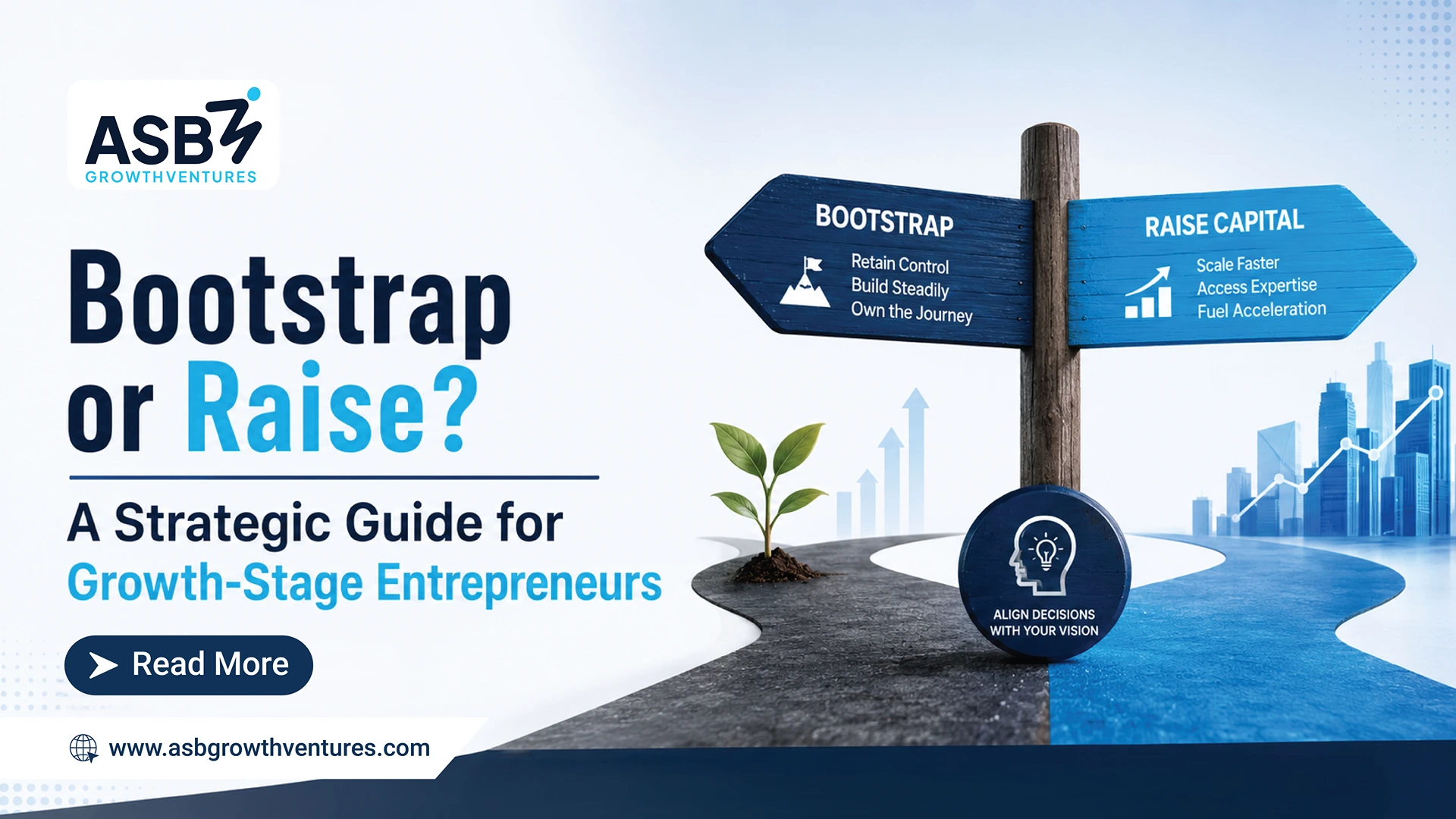
ToggleBootstrap or Raise? A Strategic Guide for Growth-Stage Entrepreneurs
Most founders face this question at some point. Usually around the time things start to actually work.
Revenue is coming in. The product has legs. Customers are talking about you. And then someone, often a well-meaning investor or an advisor friend, says: “Have you thought about raising?”
And suddenly you are sitting with a question that feels bigger than it probably needs to be. Do you take outside money and grow faster? Or do you keep full control, stay lean, and build on your own terms?
There is no universal right answer. But there is a smarter way to think through it. This guide is for founders who are past the survival stage and genuinely trying to figure out the next move.
We will walk through what each path actually means in practice, what questions you should be asking yourself, and where working with trusted ipo advisors india or a good advisory team can help you see things you might be missing.
First, What Stage Are You Actually At?
Before you can answer “bootstrap or raise”, you need to be honest about where you are. Not where you tell investors you are. Where you actually are.
Growth-stage means different things to different people. Some founders call themselves growth-stage at INR 50 lakhs ARR. Others are at INR 10 crore and still figuring out unit economics. The label matters less than the underlying reality.
A few things worth being clear-eyed about before you decide anything:
- Is your current growth limited by capital, or by something else like product, team, or market timing?
- Do you have a clear use of funds in mind, or is “raising” more of a goal than a plan?
- Have you stress-tested your unit economics? Do you know your CAC, LTV, and payback period well enough to defend them in a room full of skeptical investors?
- What does the business look like in 3 years under each scenario?
These are not trick questions. They are the exact questions serious investors will ask you. Better to work through them yourself first.

The Case for Bootstrapping Longer Than You Think
Bootstrapping has a bit of a PR problem. In startup culture, raising a round feels like progress. It gets announced on LinkedIn. It signals momentum. Staying bootstrapped, by contrast, looks like you could not raise.
That framing is wrong and it costs a lot of founders.
You Keep the Upside
Every rupee of dilution you avoid early compounds over time. Founders who bootstrap through the growth stage and only raise when they genuinely need to often end up in a much stronger position at the negotiating table. You are not raising out of necessity. You are raising from a position of strength, with real traction, real numbers, and real leverage.
Discipline Builds Better Companies
When money is limited, you get creative. You figure out what actually drives growth versus what just feels productive. A lot of well-funded companies have burned through crores learning lessons that bootstrapped companies learn for free out of necessity.
You Preserve Optionality
A business that is profitable and growing, even modestly, has options. You can raise on your terms. You can explore a strategic sale. You can pursue an SME IPO when the time is right. Working with an ipo consultant or sme ipo consultant early, even while you are still bootstrapped, helps you understand what that path looks like and whether it fits your goals.
The Case for Raising Capital at the Right Moment
That said, there are real situations where raising is the right call. The key word is right moment.
When the Market Will Not Wait
Some markets move fast. If you have genuine product-market fit and the window to dominate a category is open right now, sitting back and growing slowly can mean ceding ground to a better-funded competitor. In those cases, capital can be the difference between being a market leader and being an also-ran.
When You Have De-Risked the Model
The founders who raise well are usually the ones who have already proven the business works at some scale. They know their numbers. They have a repeatable go-to-market. They can show an investor exactly where the money will go and what the return looks like. That is a very different conversation from raising on hope and a deck.
When You Are Thinking About a Future Listing
If you have ambitions toward a public listing, the preparation work benefits from starting well before the actual raise. Pre ipo advisory services cover more than just compliance. They help you build the financial reporting discipline, the governance structures, and the investor-grade documentation that make everything downstream easier. Founders who engage top chartered accountants for ipo in mumbai early find the process far less chaotic when the time actually comes.
Questions That Actually Help You Decide
Forget the frameworks for a minute. Here are the questions that tend to cut through the noise when we work through this with founders.
Q. What Problem Does Capital Solve for You Right Now?
If you can answer this specifically, “we need to hire 4 engineers to ship X feature and capture Y market segment before Z competitor does”, that is a real answer. If the answer is vague, “we want to grow faster”, that is a sign you might not be ready to raise and definitely not ready to use the capital well.
Q. What Does Your Cap Table Look Like?
If you have existing investors, convertible notes, or informal agreements, you need to understand the full picture before adding more complexity. This is where esop advisory and proper cap table structuring comes in. Knowing where you stand, and cleaning up anything messy, is step one before any raise conversation.
Q. What Is Your Exit Timeline?
A founder who wants to build for 20 years and eventually hand the business to family has very different capital needs than someone who wants to build and sell in 5. Neither is wrong. But they call for completely different strategies. Be honest about what you actually want.
Q. Are You Raising Because You Want To or Because You Feel Like You Should?
This one matters more than people admit. Peer pressure in the startup world is real. If you are raising because you feel behind, or because your competitors raised and it made the news, that is probably not the right reason. Raise when it makes business sense, not when it makes social sense.
A Word on Hybrid Paths
The bootstrap-or-raise question is often presented as binary. It is not.
A lot of growth-stage companies do both over time. They bootstrap through early product development, raise a small seed round to prove out distribution, bootstrap again to profitability, and then raise a larger growth round from a position of real leverage. Or they build toward an SME IPO and use the public markets as their growth capital rather than VC money.
There is no single right structure. The right structure depends on your business model, your sector, your growth rate, and your personal goals as a founder. A good pre ipo advisory services team or ipo consultant can help you map the options clearly instead of making you feel like there is only one path.

How ASB Growth Ventures Works With Growth-Stage Founders
At ASB Growth Ventures, we work with founders who are at exactly this crossroads. Not the ones who have already decided and just need execution help. The ones who are genuinely trying to figure out the right move.
We bring a mix of financial modeling depth, capital markets experience, and honest advisory to these conversations. We are not trying to push you toward a raise because it benefits us. We are trying to help you build a company that is worth something real.
Our work with growth-stage entrepreneurs includes:
- Capital strategy and fundraising readiness assessment
- Financial modeling that holds up in investor conversations
- ESOP advisory and cap table structuring
- Pre-IPO advisory services for founders thinking about public markets
- Transaction advisory across fundraising, M&A, and restructuring
- SME IPO consultancy for businesses considering a listing
We work with founders across India, with particular depth in the Maharashtra market. If you are looking for people who will give you a straight answer rather than tell you what you want to hear, that is what we do.
Final Thoughts
Bootstrap or raise is the wrong question. The right question is: what does this business need right now to become what I want it to be?
Sometimes the answer is capital. Sometimes it is time. Sometimes it is better structure, cleaner financials, and the right advisors in the room.
The founders who get this right are rarely the ones who moved fastest. They are the ones who were clearest about what they were building and made capital decisions that served the business rather than the other way around.
If you are sitting with this question right now, we would love to talk it through with you.