Table of Contents
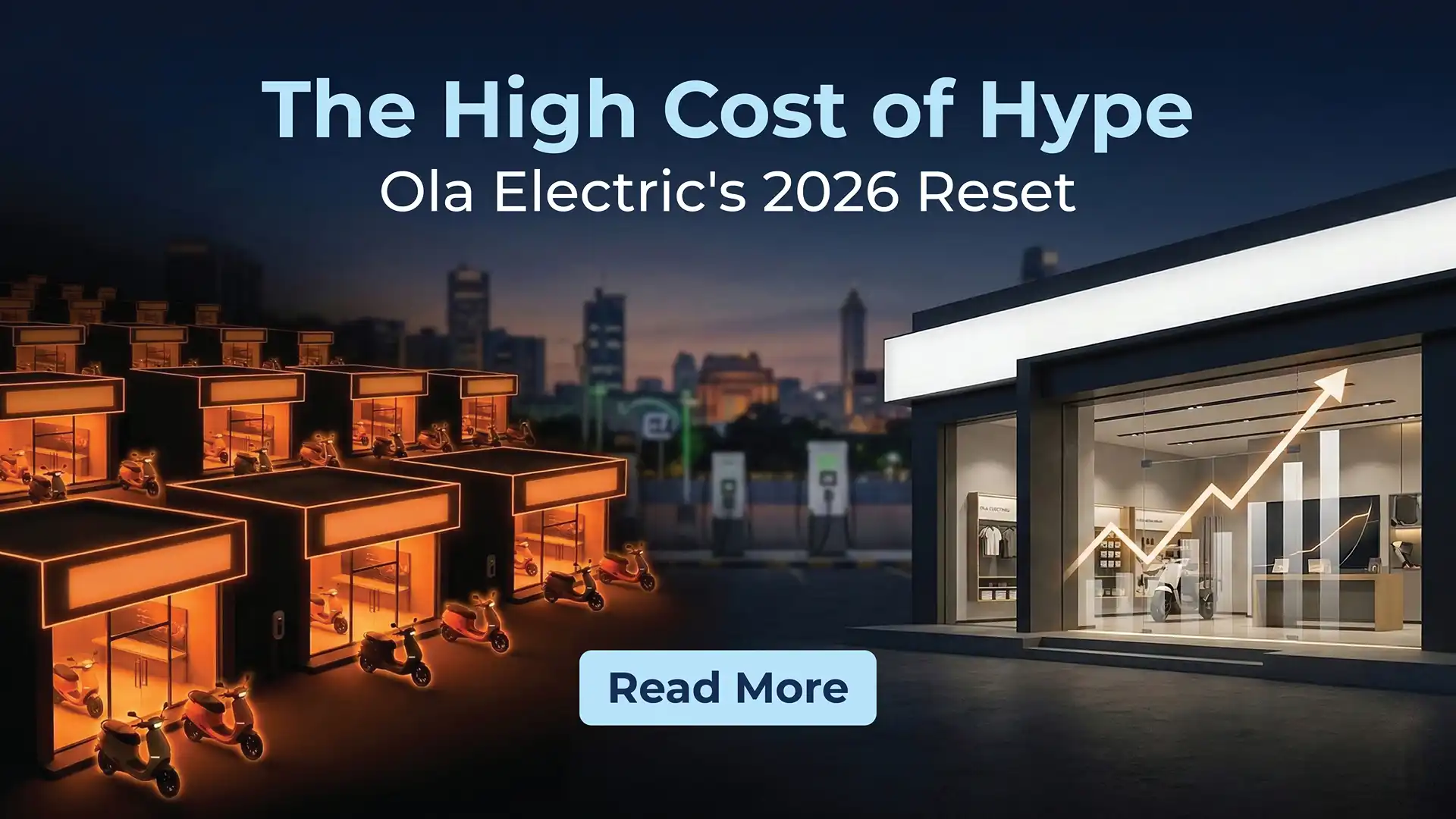
ToggleThe High Cost of Hype - Ola Electric's 2026 Structural Reset
A viral narrative recently claimed Ola Electric was in a state of ‘overnight doom’ — dropping from a celebrated 4,000-store expansion target to an optimized network of ~550 by March 2026. The truth is more nuanced.
At ASB Growth Ventures, we advise companies and growth-stage businesses every day on capital readiness, scaling strategy, and IPO preparation. Ola Electric’s journey is not a cautionary tale of failure — it is a masterclass in what happens when growth velocity outpaces structural readiness. It is a case study we return to with every founder we work with.
This is not a collapse. It is a Structural Reset.
And every founder planning to raise capital or list on the markets should understand exactly why it happened — and how to avoid it.1. The 4,000-Store Milestone: When Ambition Overtakes Architecture
In late 2024, fresh off its IPO, Ola Electric aggressively scaled its retail footprint to dominate the EV market. Thousands of locations were opened — largely sales-focused ‘Experience Centres’ or temporary pop-ups — in an effort to hit a 30% market share.
From an investor-relations standpoint, the numbers looked impressive on paper. But at ASB Growth Ventures, our due diligence framework would have raised immediate flags:
- Sales infrastructure scaled faster than service infrastructure
- A growing ‘trust deficit’ emerged as service backlogs mounted
- The sales funnel was widened without strengthening the support system behind it
This is the core tension we see in many pre-IPO companies: the pressure to show growth metrics to investors can push businesses to scale before they are operationally ready to sustain that growth.

2. The Reality Check: Three Triggers That Forced the Reset
By early 2026, the data made a pivot inevitable. The ‘growth at any cost’ model hit three compounding roadblocks that are directly relevant to any business seeking capital or planning a public listing:
- Sales Cooling: Q3 FY26 deliveries fell 61% YoY as market share eroded to legacy competitors with stronger service networks.
- Operational Burn: Quarterly OPEX peaked at ₹844 crore, turning the bloated retail network into a direct financial liability.
- Service Crisis: Public complaints about spare parts and after-sales support reached a tipping point, damaging brand equity at a critical moment.
“Q3 marks a structural reset — prioritizing fundamentals over unchecked growth.”
— Bhavish Aggarwal, CEO, Ola Electric At ASB Growth Ventures, we call this moment the ‘IPO-readiness test’ — the point where the market forces a business to demonstrate whether its growth is real or just optics.3. The Anatomy of the Reset: Shrink to Grow
Ola’s management executed a strategic pullback to optimize unit economics — a move that reflects precisely the kind of thinking we help our clients build before they ever need to be forced into it.
| Strategic Metric | Pre-Reset (2024) | Post-Reset (Q3 FY26) |
| Store Count | 4,000+ (Sales-focused) | 550–700 (Optimized) |
| Gross Margin | Variable | Record 34.3% |
| OPEX Run-rate | ~₹844 Crore (Peak) | ₹484 Cr → ₹250 Cr target |
| Breakeven Volume | High-Volume Dependent | ~15,000 units/month |
The most significant data point in the Q3 report is the record 34.3% Gross Margin. Despite a revenue dip to ₹470 crore, this signals a business that is maturing — and one that investors will look at more favourably than a high-revenue, low-margin operation.
4. The ASB Perspective: What This Means for Business Founders & Investors
Ola Electric’s pivot offers three critical lessons that form the core of our Market Readiness Accelerator (MRA) framework at ASB Growth Ventures:
1. Scale with Unit Economics, Not Just Revenue: Never build a sales funnel wider than your support capacity. We audit our clients’ back-end operational strength before advising any front-end expansion. Investors — whether in a private round or an IPO — will find these gaps during due diligence.
2. Audit Early and Often: Don’t wait for a cash crunch to review your cost structure. Our Transaction Advisory and Due Diligence practice exists precisely to identify these risks before they become crises — not after.
3. Build the Deep-Tech Moat: In the long run, owning proprietary technology or a differentiated process provides stronger investor confidence than market share achieved through spending. Ola’s investment in the Bharat Cell is a model for this thinking.
Conclusion: Rebound Through Discipline
Ola Electric’s current valuation reflects market caution, but the Structural Reset signals a company that has chosen sustainability over hype. The journey from 4,000 stores to 550 is not a retreat — it is a realignment to business reality.
For business founders considering their next funding round or an IPO listing, this is the fundamental question: Are you building a business that is investor-ready, or simply one that looks investor-ready?
Right planning today prevents a painful reset tomorrow.
If you are scaling, fundraising, or preparing for an IPO, ASB Growth Ventures can help you build the structural foundation that makes growth sustainable — and markets confident. Contact us: info@asbgrowthventures.com | +91 98672 13664About ASB Growth Ventures
ASB Growth Ventures empowers ambitious companies with the structure, strategy, and execution support they need to scale, raise capital, and enter public markets. Our services include Market Readiness Acceleration, Transaction Advisory, ESOP Advisory, Capital Structuring, Fundraising, and IPO Consultancy.